A WHISPER
don't lose your voice in this noise
INVITE A FRIEND
S U B S C R I B E
on December 5, 2019
December 5 – International Volunteer Day


p o l i t i c a l
NATO summit held in London
3-4 December, 2019
Heads of state from all around the world were in London, where was the first headquarters of NATO, on December 3-4 for a NATO summit. Queen Elizabeth, Kate Middleton, Prince Charles, and several other Windsors attended a reception at Buckingham Palace to commemorate the alliance's 70th anniversary, with Donald Trump, Angela Merkel, Emmanuel Macron, and many more foreign leaders taking part in the royal fête.
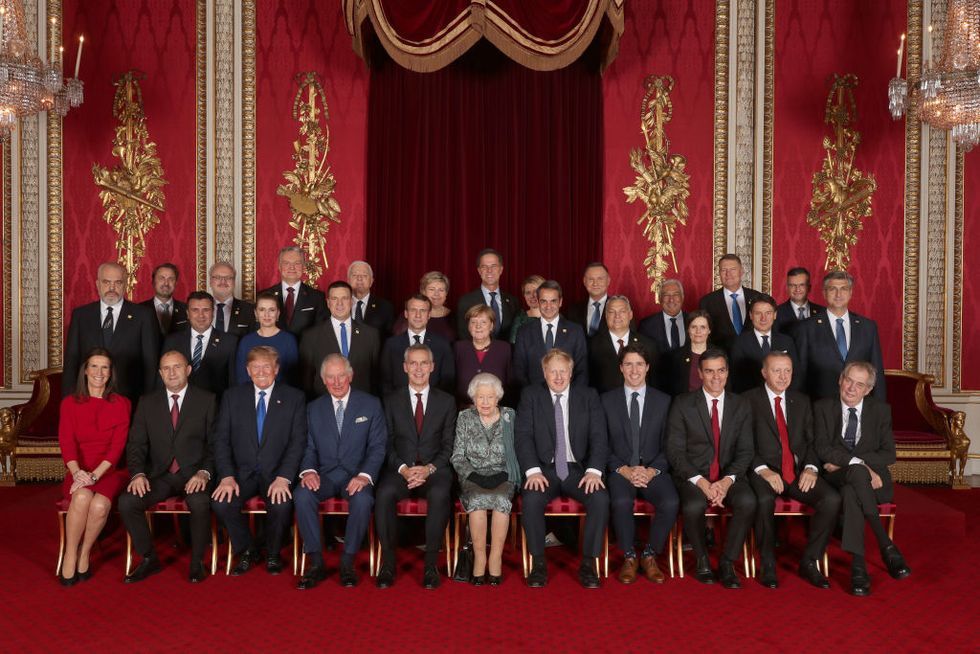
"NATO leaders with Prince Charles and Queen Elizabeth"
WPA POOL/GETTY IMAGES
The document published as a result of the summit mentions the threat to Euro-Atlantic security represented by the aggressive actions of Russia. In addition, the main threats in the document, in particular, are called terrorism, hybrid and cyber-attacks. Alliance forces will increase their willingness to respond to any threat, at any time and in any direction, the statement said. NATO officials also note that the alliance will take measures in response to the deployment of medium and shorter-range missiles by Russia. The document emphasizes that the organization is open to dialogue and constructive relations with Russia, "when Russia's actions make this possible."
The document also mentions that China's influence is growing.
On the London summit, NATO Secretary-General Jens Stoltenberg announced an increase in defence spending. In 2020, they will amount to 130 billion dollars, and in 2024 - 400 billion. US President Donald Trump insisted on increasing the budget of NATO from European countries and Canada.
Trump's participation in the London summit has been the subject of widespread media discussion. CBC Canada posted a video in which Canadian Prime Minister Justin Trudeau, British Prime Minister Boris Johnson and French President Emmanuel Macron lively discuss Trump's allegedly 40-minute press conference. The name of the head of the White House is not mentioned. Trump later called Trudeau "double-faced" and criticized Canada for not paying two percent of its GDP to NATO. According to the US president, this criticism could cause Trudeau's discontent.
The document also mentions that China's influence is growing.
On the London summit, NATO Secretary-General Jens Stoltenberg announced an increase in defence spending. In 2020, they will amount to 130 billion dollars, and in 2024 - 400 billion. US President Donald Trump insisted on increasing the budget of NATO from European countries and Canada.
Trump's participation in the London summit has been the subject of widespread media discussion. CBC Canada posted a video in which Canadian Prime Minister Justin Trudeau, British Prime Minister Boris Johnson and French President Emmanuel Macron lively discuss Trump's allegedly 40-minute press conference. The name of the head of the White House is not mentioned. Trump later called Trudeau "double-faced" and criticized Canada for not paying two percent of its GDP to NATO. According to the US president, this criticism could cause Trudeau's discontent.
e c o l o g y
Plastic pollution kills half a million hermit crabs on remote islands
More than half a million hermit crabs have been killed after becoming trapped in plastic trash on two remote island groups. This raises concerns that the deaths could be part of a global species decline.
The pioneering study found that 508,000 crabs died on the Cocos (Keeling) Islands archipelago in the Indian Ocean, along with 61,000 on Henderson Island in the South Pacific. Previous studies have found high levels of plastic pollution at both sites.
Scholars from the Institute for Marine and Antarctic Studies (Imas) at the University of Tasmania, the Natural History Museum in London, and the community science organisation the "Two Hands Project" conducted research.
They surveyed sites across four Cocos Islands and Henderson for open plastic containers, with the opening sloped upwards in a way that would prevent the crab from leaving, and counted the number of entrapped crabs in each. They then extrapolated their results across another 15 islands in the Cocos archipelago.
The pioneering study found that 508,000 crabs died on the Cocos (Keeling) Islands archipelago in the Indian Ocean, along with 61,000 on Henderson Island in the South Pacific. Previous studies have found high levels of plastic pollution at both sites.
Scholars from the Institute for Marine and Antarctic Studies (Imas) at the University of Tasmania, the Natural History Museum in London, and the community science organisation the "Two Hands Project" conducted research.
They surveyed sites across four Cocos Islands and Henderson for open plastic containers, with the opening sloped upwards in a way that would prevent the crab from leaving, and counted the number of entrapped crabs in each. They then extrapolated their results across another 15 islands in the Cocos archipelago.
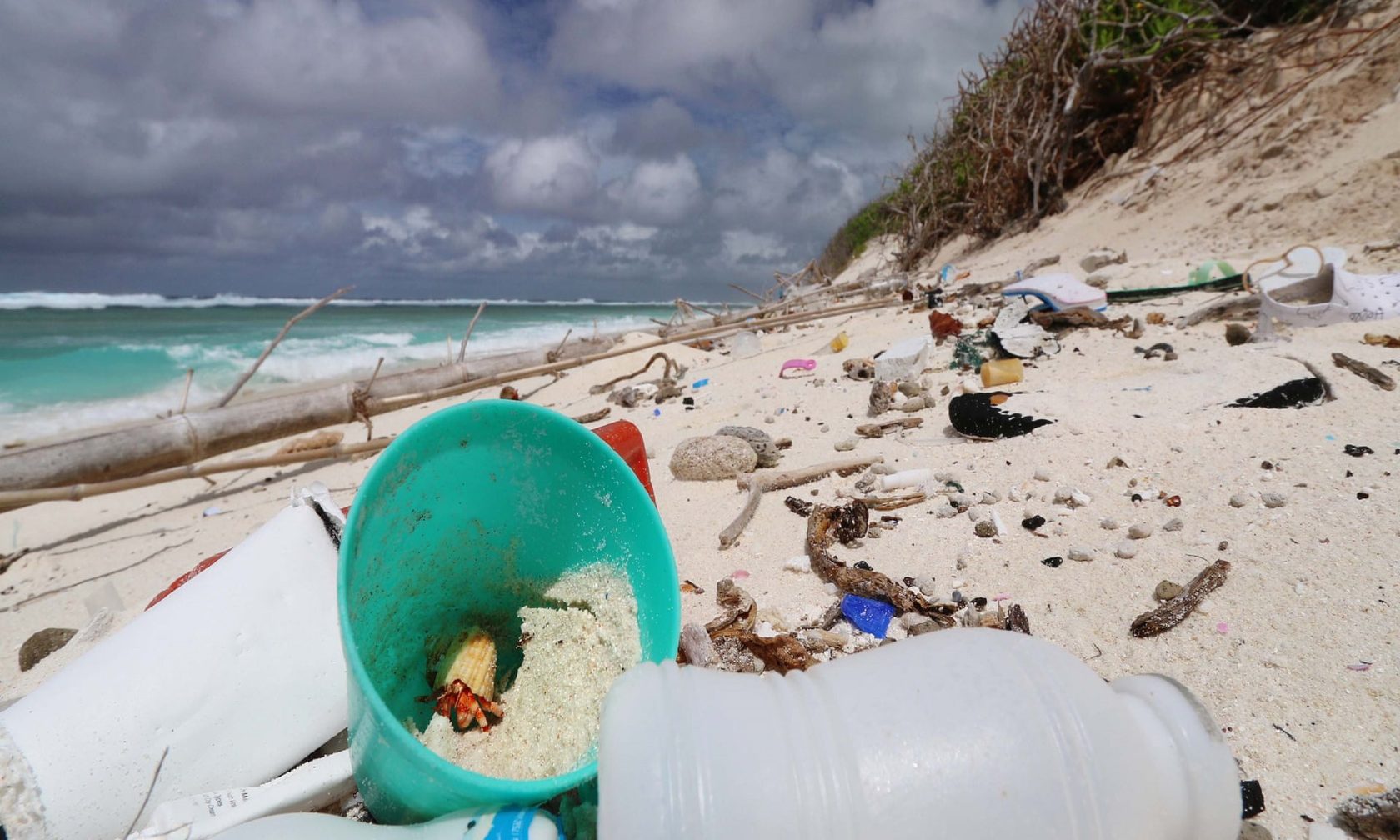
"Hermit crabs trapped in plastic containers" by NHM, theguardian.com
The problem is worsened as hermit crabs use the odour of recently deceased crabs to track down newly available shells. This leads to multiple crabs becoming trapped in the same area – in one instance, 526 crabs were found in a single plastic container.
Hermit crabs are an important part of tropical environments as they disperse seeds and aerate and fertilise soil, so their decline could have a significant impact on surrounding ecosystems.
Bond said the potential for plastics to cause damage on land was under-acknowledged: "In the ocean, it entangles and is ingested by wildlife; on land it acts as a trap, as we've seen, but can also be a physical barrier to species moving along the ground."
The research team say their findings show the need for an urgent investigation into the death rate of hermit crabs worldwide.
Hermit crabs are an important part of tropical environments as they disperse seeds and aerate and fertilise soil, so their decline could have a significant impact on surrounding ecosystems.
Bond said the potential for plastics to cause damage on land was under-acknowledged: "In the ocean, it entangles and is ingested by wildlife; on land it acts as a trap, as we've seen, but can also be a physical barrier to species moving along the ground."
The research team say their findings show the need for an urgent investigation into the death rate of hermit crabs worldwide.
i n t e r n a t i o n a l
Dadaab refugee camp's only female radio journalist
Exiled Somali Kamil Ahmed says her job at Gargaar FM is more important than ever as the threat of closure hangs over the camp.
"I feel like the whole community is waiting for me," the only female reporter at the station Kamil Ahmed, 20, says, flicking through her notebook.
This makeshift studio is home to the only radio station in Kenya's Dadaab refugee camp. Broadcasting a Somali-language programme, Gargaar FM (the name means assistance in Somali) provides vital information to more than 200,000 people who call Dadaab home and serves as a source of entertainment and psychosocial support for refugees trapped in the isolated camp, first established in 1991.
The thirst for information has never been greater here. Kenya announced the closure of the complex about three years ago, so residents live with the uncertainty of the camp's future and the threat of returning to the conflict in Somalia.
Feeling cut off from the rest of Kenya and East Africa, refugees in Dadaab cling to their radios to keep up with local and regional news.
"Gargaar FM station has been one of the most effective mediums in communicating with refugees in Dadaab," says Assadullah Nasrullah at UNHCR's Dadaab office. "It helps disseminate important messages to the refugee population on healthcare, education, voluntary repatriation, registration and other humanitarian programmes."
Gargaar FM also connects people to the outside world via the BBC World Service and Voice of America service.
"I feel like the whole community is waiting for me," the only female reporter at the station Kamil Ahmed, 20, says, flicking through her notebook.
This makeshift studio is home to the only radio station in Kenya's Dadaab refugee camp. Broadcasting a Somali-language programme, Gargaar FM (the name means assistance in Somali) provides vital information to more than 200,000 people who call Dadaab home and serves as a source of entertainment and psychosocial support for refugees trapped in the isolated camp, first established in 1991.
The thirst for information has never been greater here. Kenya announced the closure of the complex about three years ago, so residents live with the uncertainty of the camp's future and the threat of returning to the conflict in Somalia.
Feeling cut off from the rest of Kenya and East Africa, refugees in Dadaab cling to their radios to keep up with local and regional news.
"Gargaar FM station has been one of the most effective mediums in communicating with refugees in Dadaab," says Assadullah Nasrullah at UNHCR's Dadaab office. "It helps disseminate important messages to the refugee population on healthcare, education, voluntary repatriation, registration and other humanitarian programmes."
Gargaar FM also connects people to the outside world via the BBC World Service and Voice of America service.
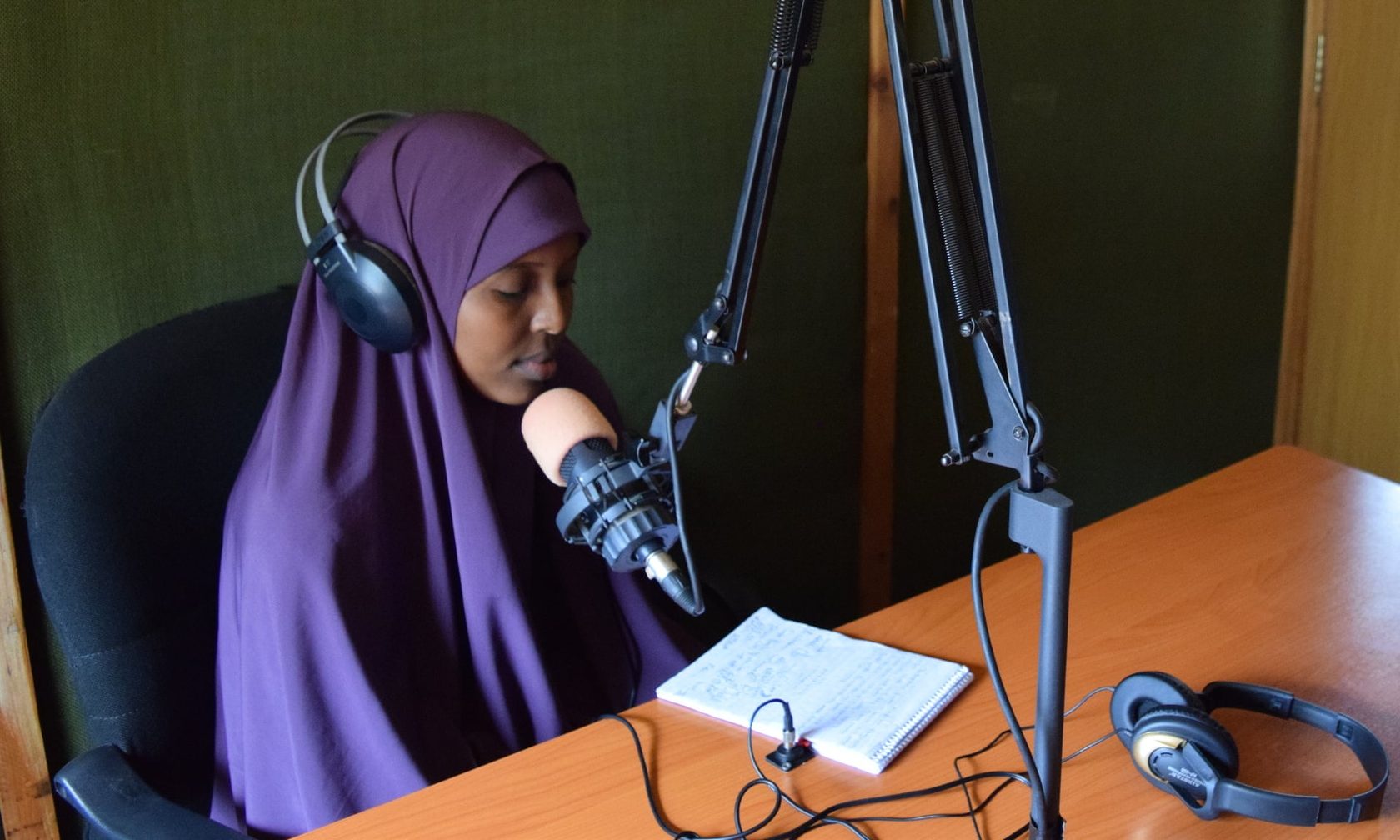
"Kamil Ahmed: 'I feel like the whole community is waiting for me.'"
By Moulid Hujale
By Moulid Hujale
Fadumo Ahmed is a mother of five who runs a small grocery stall in the camp. She says that they cannot just rely on what the UN and aid organisations tell them, they have to get an independent source of information. They afraid of the imminent closure of the camp affected everything, including their businesses and livelihoods. So the radio is important in keeping up to date on Kenya's changing political moves.
The station is supported by the UNHCR but run by a group of young journalists who studied and grew up in the sprawling camp.
Ahmed was nine when her father was killed in Mogadishu in 2008. They had to flee the country and came to Dadaab to rebuild their lives. Ahmed found peace and hope and immediately enrolled in school there. But opportunities in the camp are limited. Having no chances to go to high school she enrolled in a one-year after-school youth programme run by the Norwegian Refugee Council where she received basic journalism training.
The station is supported by the UNHCR but run by a group of young journalists who studied and grew up in the sprawling camp.
Ahmed was nine when her father was killed in Mogadishu in 2008. They had to flee the country and came to Dadaab to rebuild their lives. Ahmed found peace and hope and immediately enrolled in school there. But opportunities in the camp are limited. Having no chances to go to high school she enrolled in a one-year after-school youth programme run by the Norwegian Refugee Council where she received basic journalism training.
Her voice on the airwaves has encouraged other girls to apply for internships at the station.
But not everyone in this conservative community is happy with Ahmed's work. Some discourage her from doing a "man's job" and tell her she should get married instead.
She believes her ambition is bigger than the challenges. She wants to go to university and eventually return to Somalia despite being fully aware that it is one of the most dangerous places to be a journalist.
Many here refer to Dadaab as an open prison because of the Kenyan government's strict encampment policy. For many the lack of identity and freedom of movement is crippling their potential.
Ahmed says that she cannot attend training or media workshops in other countries, because she don't have an identity card or passport with which she can travel. This discourages her from seeking opportunities outside of Dadaab.
When Gargaar FM first went on air in 2013, there were about half a million people in Dadaab, more than five times its original capacity. It is now closer to 217,000.
But it is the importance of her work that drives Ahmed on, and she produces, edits and presents her own stories and programmes.
"It is a lot of work, and there is only a handful of staff here so we have to utilise the limited resources we have in the station," she says. "But when you have a whole community depending on you for their information, you have to do everything it takes to meet their expectations."
But not everyone in this conservative community is happy with Ahmed's work. Some discourage her from doing a "man's job" and tell her she should get married instead.
She believes her ambition is bigger than the challenges. She wants to go to university and eventually return to Somalia despite being fully aware that it is one of the most dangerous places to be a journalist.
Many here refer to Dadaab as an open prison because of the Kenyan government's strict encampment policy. For many the lack of identity and freedom of movement is crippling their potential.
Ahmed says that she cannot attend training or media workshops in other countries, because she don't have an identity card or passport with which she can travel. This discourages her from seeking opportunities outside of Dadaab.
When Gargaar FM first went on air in 2013, there were about half a million people in Dadaab, more than five times its original capacity. It is now closer to 217,000.
But it is the importance of her work that drives Ahmed on, and she produces, edits and presents her own stories and programmes.
"It is a lot of work, and there is only a handful of staff here so we have to utilise the limited resources we have in the station," she says. "But when you have a whole community depending on you for their information, you have to do everything it takes to meet their expectations."
i n _ K a z a k h s t a n
Tokaev signed the budget law for 2020-2022
President Kassym-Zhomart Tokayev signed the law "On the republican budget for 2020-2022" published in the official web-site of Akorda. When considering the draft budget, the Mazhilis assumed that 46 percent of the total republican budget expenditures, or 18.2 trillion tenge, would be allocated for the development of the social sphere. Also, during the work on the project in the Majilis, amendments were introduced aimed at increasing the salaries of teachers by 25 percent from September 1, 2020, and doubling over the next four years. Amendments were also introduced to increase the wages of cultural and art workers from 35 percent to 50 percent starting from January 1, 2020. The forecast of incomes (excluding transfers) of the republican budget for 2020 was determined for 7,957,089,928 thousand tenge. Later, the Senate introduced 44 amendments. Some are associated with amendments and additions to the text of the bill in connection with the redistribution of the expenditure side of the republican budget. 41 amendment provides for the redistribution of the expenditure of the republican budget for 2020-2022. Government reserve in 2020 reduced by 15 billion tenge.
i n t e r t a i n m e n t
Drake and Ed Sheeran most streamed artists on Spotify this decade
Drake has been named as the most-streamed artist of the decade on Spotify, with over 28bn streams. Ed Sheeran's Shape of You was the most streamed song, with 2.3bn streams.
TOP-5 songs:
Drake – One Dance
Ed Sheeran – Shape of You
Post Malone – Rockstar
The Chainsmokers – Closer
Ed Sheeran – Thinking Out Loud
Sheeran, Post Malone, Ariana Grande and Eminem were the other most streamed artists.
The most streamed song of 2019 was Señorita by Camila Cabello and Shawn Mendes. It scored more than 1bn streams. Closing in on that figure is Billie Eilish's Bad Guy with 990m. Eilish's album When We All Fall Asleep, Where Do We Go was the most streamed album of the year. The most streamed artist globally was Post Malone, whose album Hollywood's Bleeding was the second most streamed after Eilish's. In the UK, the most streamed song and album were both by Scottish breakout balladeer Lewis Capaldi.
Spotify remains the world's most popular streaming service. With a user base of 113 million paying subscribers, its popularity continues to grow as the market for downloads and CDs wanes. Its chief rival, Apple Music, has 60 million paying subscribers, and launched a new promotional campaign today: the Apple Music awards, which awarded Eilish artist of the year, album of the year and songwriter of the year, the latter shared with her collaborator and brother, Finneas. Lil Nas X's Old Town Road was named song of the year, and Lizzo breakthrough artist.
TOP-5 songs:
Drake – One Dance
Ed Sheeran – Shape of You
Post Malone – Rockstar
The Chainsmokers – Closer
Ed Sheeran – Thinking Out Loud
Sheeran, Post Malone, Ariana Grande and Eminem were the other most streamed artists.
The most streamed song of 2019 was Señorita by Camila Cabello and Shawn Mendes. It scored more than 1bn streams. Closing in on that figure is Billie Eilish's Bad Guy with 990m. Eilish's album When We All Fall Asleep, Where Do We Go was the most streamed album of the year. The most streamed artist globally was Post Malone, whose album Hollywood's Bleeding was the second most streamed after Eilish's. In the UK, the most streamed song and album were both by Scottish breakout balladeer Lewis Capaldi.
Spotify remains the world's most popular streaming service. With a user base of 113 million paying subscribers, its popularity continues to grow as the market for downloads and CDs wanes. Its chief rival, Apple Music, has 60 million paying subscribers, and launched a new promotional campaign today: the Apple Music awards, which awarded Eilish artist of the year, album of the year and songwriter of the year, the latter shared with her collaborator and brother, Finneas. Lil Nas X's Old Town Road was named song of the year, and Lizzo breakthrough artist.
Good day and good thoughts!
with love, Aliya
with love, Aliya
